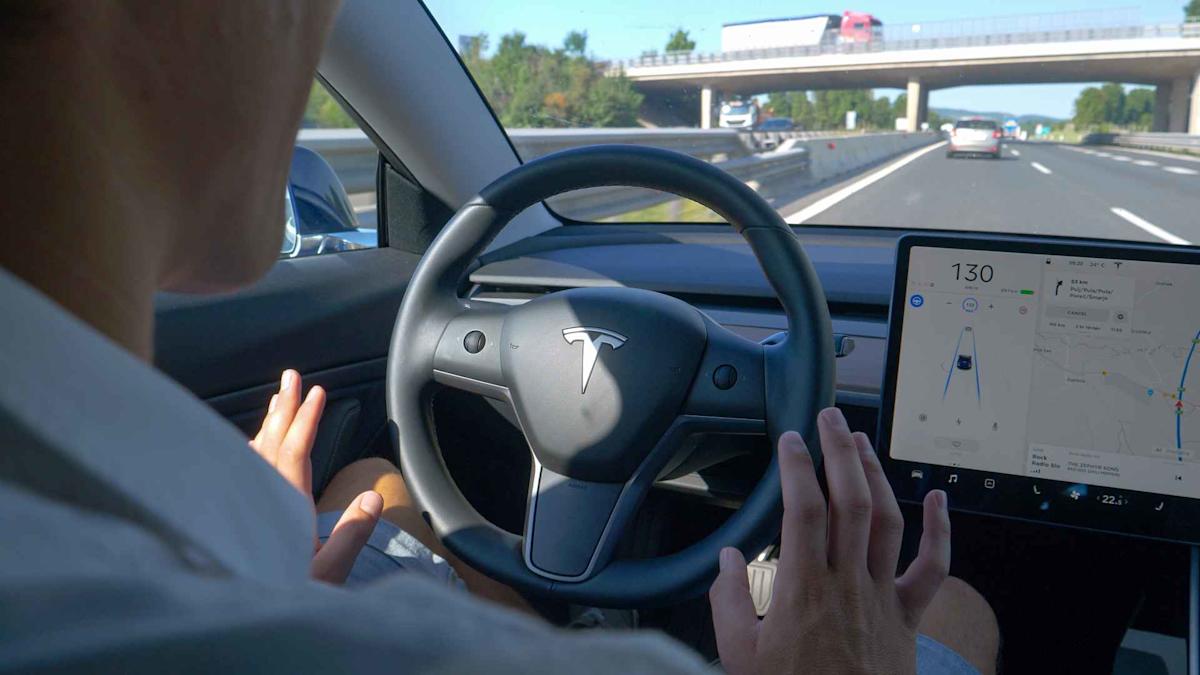
The Autonomous Horizon: Where Tesla's Ambitions Lie
Tesla, Inc. has long transcended its initial identity as merely an electric vehicle manufacturer. Under the visionary leadership of Elon Musk, the company has strategically diversified its portfolio, venturing into solar energy solutions, advanced AI-powered robotics, and sophisticated software development. A significant portion of its revenue even stems from the sale of regulatory credits to other automakers, illustrating a multifaceted business model far beyond car production. This trajectory of continuous evolution naturally extends to even more futuristic realms, with Musk occasionally hinting at innovations as ambitious as flying cars. However, it is the pursuit of full self-driving (FSD) capabilities and the audacious "robotaxi" dream that currently commands the lion's share of investor speculation and potential future valuation.
The vision is clear: if Tesla can successfully navigate the complexities of autonomous driving and establish a global network of self-driving robotaxis, the financial upside could be staggering. This isn't just about selling cars; it's about pioneering a transformative transportation-as-a-service model. Mega-investor Cathie Wood of Ark Invest, known for her bold predictions, has consistently expressed confidence in Tesla's potential to dominate this burgeoning sector. She believes Tesla's existing manufacturing infrastructure, designed for producing vehicles at an unprecedented scale, provides a distinct advantage in rapidly deploying a vast robotaxi fleet, potentially outpacing competitors like Alphabet's Waymo, which currently leads the autonomous car space in certain metrics.
Industry forecasts underscore the immense market potential, predicting that autonomous vehicle sales could surpass 41 million units by 2029 and surge to 58 million units by 2030. The mere mention of Tesla's robotaxi plans has historically caused significant market ripples; for instance, its stock reportedly jumped nearly 10% in July 2025 following such announcements. Should Tesla successfully roll out a large, fully functional autonomous fleet, the market excitement could not only persist but also significantly amplify, setting the stage for an unprecedented re-evaluation of how Tesla's robotaxi ambitions could supercharge its value.
Quantifying the Self-Driving Premium: Trillions at Stake
The belief that self-driving technology is not just an additive feature but a fundamental pillar of Tesla's future worth is deeply ingrained in its current market valuation. In fact, a significant portion—reportedly as much as 77% of Tesla's stock value rides on the success of its self-driving ambitions. This figure, startling to some, highlights the extent to which investors have priced in the potential of a fully autonomous future for the company, even before it has been definitively proven.
Wall Street analysts and investment firms have attempted to quantify this future premium, arriving at projections that range from optimistic to truly stratospheric. Ark Invest, for example, posits a scenario where Tesla could be valued as high as $5.7 trillion by 2029, provided its robotaxi business achieves global scale. This projection represents nearly five times its valuation at the time of the analysis, underscoring the revolutionary impact a successful autonomous fleet could have. Even more conservative estimates, such as those from Morgan Stanley, suggest that a functioning self-driving fleet could add anywhere from $500 billion to $1 trillion to Tesla's market capitalization over time. These figures eloquently illustrate the immense financial upside linked to the realization of the robotaxi dream, making it clear why so much of the current Tesla self-driving value is considered a future bet.
However, it's crucial to understand that these staggering figures are not guarantees; they are predicated on a complex interplay of technological breakthroughs, regulatory permissions, and market acceptance. The "self-driving premium" embedded in Tesla's stock is essentially a high-stakes wager on future innovation. For investors, this means the current valuation is highly sensitive to news regarding FSD development, regulatory hurdles, and competitive advancements. The sheer scale of these projections indicates that the market views Tesla less as a traditional automaker and more as a cutting-edge AI and robotics company, where the software driving the vehicles is arguably more valuable than the hardware itself.
The Roadblocks Ahead: Navigating the "Big If"
While the potential for Tesla's self-driving division to supercharge its valuation is undeniable, the path to realizing this future is fraught with significant challenges. The "big if" isn't merely a figure of speech; it encapsulates a multitude of critical factors that must align perfectly for the robotaxi dream to transition from ambitious vision to profitable reality.
- Regulatory Approval: One of the most formidable hurdles is securing widespread regulatory approval. Autonomous vehicle laws and safety standards vary significantly across different jurisdictions, both within countries and globally. Navigating this patchwork of regulations requires immense lobbying efforts, rigorous testing, and demonstrable safety records to gain trust from governments and licensing bodies. A single major accident involving an autonomous vehicle could set back progress significantly, impacting public perception and legislative timelines.
- Technological Maturity: The FSD software itself must evolve to a level of sophistication that consistently matches or exceeds human reaction time and judgment in diverse and unpredictable driving scenarios. Reports, such as those from Electrek, indicating "no real improvement in miles between disengagement" for Tesla's Full Self-Driving system, highlight the ongoing technological complexities. Achieving Level 5 autonomy, where a vehicle can operate completely without human intervention in all conditions, remains an incredibly difficult engineering feat, requiring advancements in sensor technology, AI algorithms, and real-time decision-making capabilities.
- Operating Costs and Profitability: For robotaxis to be a viable business, operating costs must be driven down significantly. Analysts at Goldman Sachs have estimated current robotaxi operating costs, which include depreciation, insurance, and remote monitoring, at around $1.34 per mile. Tesla's stated target of 40 cents per mile, while ambitious, is unlikely to be achieved before 2040 according to some expert opinions. Achieving this cost efficiency is crucial for the service to be both profitable for Tesla and affordable for riders, ensuring widespread adoption and competitive pricing against traditional ride-hailing services.
- Competition and Public Acceptance: Tesla is not alone in the race for autonomy. Established tech giants like Waymo and traditional automakers are investing heavily in their own self-driving initiatives. Furthermore, public trust and acceptance of driverless vehicles are paramount. Concerns over safety, data privacy, and the ethical implications of AI decision-making must be addressed comprehensively to encourage widespread adoption.
- Core Business Health: The self-driving ambitions also exist within the context of Tesla's broader business performance. Challenges in its core business, such as the reported 13% year-over-year decline in vehicle deliveries in Q1 2025, as per CBT News, can impact investor confidence and the resources available for the long-term, capital-intensive development of FSD.
These challenges underscore that while the potential rewards are immense, the realization of Tesla's self-driving dream is far from guaranteed and will demand sustained innovation, regulatory cooperation, and market acceptance.
Investor Insights: Balancing Hype and Reality
For investors navigating the volatile waters of Tesla stock, understanding the nuances of its self-driving ambitions is paramount. The significant portion of Tesla's valuation tied to FSD and robotaxis presents both exhilarating opportunities and considerable risks. It's a high-stakes scenario where the payoff could be generational wealth creation, but the downside could also be substantial.
For Existing Tesla Shareholders:
- Embrace the Vision, But Acknowledge the 'If': If you already own Tesla stock, the self-driving car represents an incredibly exciting premise that aligns with the company's long-standing reputation for disruptive innovation. However, it's crucial to remain pragmatic and not overlook the complex, multi-faceted risks involved.
- Stay Informed: Keep a close eye on technical progress in FSD development (e.g., "miles between disengagement" statistics, beta updates), regulatory shifts in key markets, and competitive advancements from rivals. These factors will directly influence the likelihood of Tesla achieving its robotaxi goals.
- Long-Term Horizon: Realizing the full value of the self-driving bet will likely require a long-term investment horizon, as the development and deployment of truly autonomous systems are multi-year endeavors.
For Prospective Investors:
- Conduct Thorough Due Diligence: Before pouring capital into Tesla, delve deep into the specifics of its self-driving strategy, its competitive advantages, and the technological and regulatory hurdles. Don't invest purely on hype.
- Understand the Speculative Nature: Acknowledge that a substantial portion of the current Tesla self-driving value is speculative. You are, in essence, investing in a future technology that is still under development and subject to significant unknowns.
- Diversification is Key: Given the concentrated risk associated with Tesla's self-driving ambitions (where 77% of its value could be at stake), it's prudent to ensure your overall investment portfolio remains diversified. Avoid over-allocating to a single stock, no matter how promising its future seems.
- Scenario Planning: Consider various outcomes. What if self-driving takes longer to materialize than expected? What if a competitor achieves Level 5 autonomy first? What if regulatory bottlenecks persist? Understanding these scenarios can help you assess your risk tolerance.
- Focus on Fundamentals (Beyond FSD): While self-driving is a major catalyst, don't ignore Tesla's core EV business, its energy storage solutions, and its profitability. A strong foundational business can provide a buffer even if the FSD timeline extends.
Ultimately, investing in Tesla today means investing in a company that has a proven track record of defying skeptics, but also one that is placing an enormous bet on a technology that is still in its infancy. The rewards could be immense, but so are the risks, making it an investment journey best undertaken with a clear understanding of both the vision and the intricate challenges ahead.
Conclusion
Tesla's journey from an ambitious EV startup to a global technology powerhouse has been defined by bold bets and audacious goals. None, however, loom as large or carry as much weight for its future valuation as its pursuit of full self-driving capabilities and the transformative robotaxi service. With an estimated 77% of Tesla's stock value reportedly tied to the success of this autonomous vision, the stakes for the company and its investors could not be higher. While the potential for trillions of dollars in added market capitalization is a powerful motivator, the path is anything but smooth, riddled with formidable technical challenges, complex regulatory landscapes, and intense competition. For investors, understanding this intricate balance between immense potential and significant hurdles is crucial. The future trajectory of the Tesla self-driving value hinges not just on technological brilliance, but on the successful navigation of a dynamic ecosystem that will ultimately determine if the "big if" transforms into an undeniable reality.